


The Old Man Who Lost His Horse
An old man faces good and bad events calmly. Could what looks like bad luck actually bring something good, or the other way around?
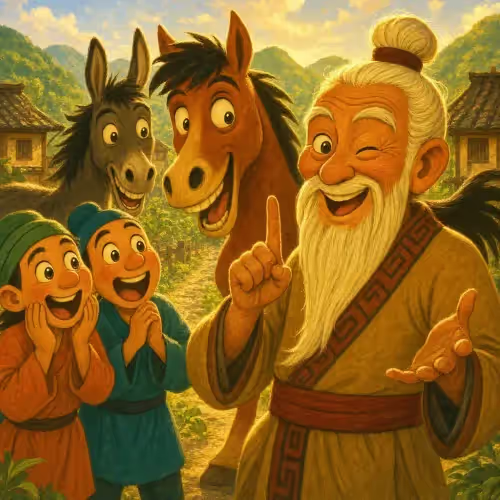
Once, there was an old man who lived with his son in a quiet village. Together, they raised horses and enjoyed riding them through the countryside. One day, one of their finest horses broke free and ran away into a distant land. The neighbors, hearing about this, rushed to the old man’s house to offer their sympathy.
"Oh, what bad luck! Losing such a valuable horse!" they exclaimed. But the old man didn’t seem sad at all. He smiled softly and said, “Who knows? Maybe losing the horse isn’t such bad luck after all.”
The villagers were puzzled by his words but left him alone.
Weeks passed, and to everyone’s surprise, the horse returned. Not only that, but it brought along a strong and beautiful wild horse. The neighbors, excited by this stroke of good fortune, hurried back to congratulate the old man.
"You’re so lucky! Now you have two fine horses!" they cheered. But the old man didn’t look as happy as they expected. Instead, he replied, “Who knows? This new horse may not bring such good fortune.”
The villagers were even more confused but said nothing.
The old man’s son loved to ride horses, and he was eager to try out the new one. One day, he rode it through the fields. But suddenly, the wild horse was startled and threw him off its back. The young man fell hard and broke his leg. Again, the neighbors came to the old man’s house, this time with words of comfort.
"We’re so sorry about your son’s injury. What a terrible misfortune!" they said. But the old man simply shrugged and replied, “Who knows? Perhaps it’s not as bad as it seems.”
The villagers shook their heads in disbelief. They thought the old man was too sad to understand what had happened.
Not long after, a war broke out, and the emperor’s soldiers came to the village to take all the young men to fight. Many young men were forced to go, but the old man’s son stayed behind because of his injured leg. Sadly, many of the young men who went to war did not return.
The neighbors realized that the old man’s words were wise. What seemed like bad luck had saved his son’s life.
Audio available for B1 version
Read Along unavailable for this story
Once, there was an old man who lived with his son in a quiet village.
Together, they raised horses and enjoyed riding them through the countryside.
One day, one of their finest horses broke free and ran away into a distant land.
The neighbors, hearing about this, rushed to the old man’s house to offer their sympathy.
"Oh, what bad luck!
Losing such a valuable horse!" they exclaimed.
But the old man didn’t seem sad at all.
He smiled softly and said, “Who knows?
Maybe losing the horse isn’t such bad luck after all.”
The villagers were puzzled by his words but left him alone.
Weeks passed, and to everyone’s surprise, the horse returned.
Not only that, but it brought along a strong and beautiful wild horse.
The neighbors, excited by this stroke of good fortune, hurried back to congratulate the old man.
"You’re so lucky!
Now you have two fine horses!" they cheered.
But the old man didn’t look as happy as they expected.
Instead, he replied, “Who knows?
This new horse may not bring such good fortune.”
The villagers were even more confused but said nothing.
The old man’s son loved to ride horses, and he was eager to try out the new one.
One day, he rode it through the fields.
But suddenly, the wild horse was startled and threw him off its back.
The young man fell hard and broke his leg.
Again, the neighbors came to the old man’s house, this time with words of comfort.
"We’re so sorry about your son’s injury.
What a terrible misfortune!" they said.
But the old man simply shrugged and replied, “Who knows?
Perhaps it’s not as bad as it seems.”
The villagers shook their heads in disbelief.
They thought the old man was too sad to understand what had happened.
Not long after, a war broke out, and the emperor’s soldiers came to the village to take all the young men to fight.
Many young men were forced to go, but the old man’s son stayed behind because of his injured leg.
Sadly, many of the young men who went to war did not return.
The neighbors realized that the old man’s words were wise.
What seemed like bad luck had saved his son’s life.
Kudala, kwakukho ixhego elalihlala nonyana walo kwilali ethe cwaka. Babengabantu abathanda amahashe, bewakhulisa, besoloko bewakhwela bejikeleza emaphandleni. Ngenye imini, elinye lamahashe abo elihle labaleka, laphuma laqhwesha laya ezweni elikude.
Bathe abamelwane bokuyiva lento, bakhawuleza baya endlwini yexhego ukuyokubonakalisa uvelwano.
"Oh, ilishwa elingaka! Ukulahlekelwa lihashe elixabisekileyo ngoluhlobo!" batsho. Kodwa ixhego alibonisanga sizi. Lavela lancuma kancinci lathi, "Ngubani owaziyo? Mhlawumbi ukulahleka kwalo eli hashe akulilishwa.”
Abahlali basala bedidekile yilentetho, baze bemka bamshiya yedwa.
Kwadlula iiveki ezimbalwa, kungacingelwanga, labuya ihashe. Alibuyanga lodwa, labuya lihamba nelinye ihashe lasendle elihle elimnyama. Abamelwane, bevuyiswa lelithamsanqa, babaleka kwakhona baya kuvuyisana nexhego.
"Unethamsanqa! Ngoku unamahashe amabini amahle!" batsho. Kodwa ixhego alibonisanga kuchwayita njengoko bebelindele. Endaweni yoko lathi, "Ngubani owaziyo? Mhlawumbi eli hashe litsha lisenongazi nantlahla.
Abahlali badideka ngaphezulu kodwa bathi cwaka.
Unyana wexhego wayethanda ukukhwela amahashe, waza wanqwenela ukuvavanya eli litsha. Ngenye imini, walikhwela waya entsimini. Kodwa ngelishwa, ihashe lasendle lothuka, lamwisa phantsi. Inkwenkwe yawa yophuka umlenze. Kwakhona, abamelwane beza endlwini yendoda endala, kwelityeli, bezisa amazwi entuthuzelo.
"Uxolo kakhulu ngomlenze wonyana wakho. Yintlekele le!" batsho. Kodwa ixhego lathatha umoya lanyikimisa amagxa lathi, "Ngubani owaziyo? Mhlawumbi ayimbi kangako
nibona lemeko."
Abahlali banyikinya iintloko, becinga ukuba ixhego ilbhidekile lolusizi. Akudlulanga ixesha elide, kwaqhambuka imfazwe. Amajoni eNkosi eza elalini ethatha onke amakhwenkwe asemacinci ukuba ayokulwa. Abaninzi bathathwa ngenkani, kodwa unyana wexhego washiyeka ngenxa yomlenze wakhe owaphukileyo. Ngelishwa, amakhwenkwe amaninzi emfazweni akazange abuye.
Kulapho abamelwane baqonda khona ukuba ixhego belikrelekrele. Oko babekuthatha njengelishwa, kwaba sisipho esisindise ubomi bonyana wakhe.
Ixhego lijongene neziganeko ezilungileyo nezimbi ngokuzolileyo. Ingaba into ekhangeleka ngathi lishwangusha inokuzisa into entle, okanye ngenye indlela?

Something went wrong. Please try again.
Word Finder
Puzzled
Feeling confused and not understanding something.Sympathy
Feeling sorry when someone has a problem.Exclaimed
Spoke loudly because of strong feelings.Fortune
Something very lucky or valuable happens.Startled
Suddenly surprised or scared by something.Misfortune
Something bad or unlucky happens.Shrugged
Lifted shoulders to show not caring.Disbelief
Not able to believe something is true.Emperor
A ruler of a big land or country.Wise
Knowing and understanding things very well.
Understanding Questions
- What happened to the old man’s finest horse at the beginning of the story?
- How did the old man respond when his neighbors told him it was bad luck to lose the horse?
- What unexpected event occurred after the horse returned to the old man?
- Why did the young man break his leg?
- How did the injury to the young man save him when the war broke out?
Reflection Questions
- Can you explain what happened in the story?
- How did the old man’s attitude help him stay calm during difficult situations?
- Can you think of a time when something that seemed bad at first turned out to have a positive outcome?
- What does this story teach us about the way we view fortune and misfortune in life?
- How can we stay calm and wise like the old man when unexpected things happen in our lives?
Fable Quotes
The ability to adjust is the key to overcoming life’s surprises.
The way you see the world shapes the world you see.
Time reveals all things; patience is the key to unveiling them.
Just One More Fable

- Wisdom
- Choice
Tale of the Three Fishes
Three fish lived in a lake, but when fishermen planned to catch them, the two left while the laid-back one stayed and was caught.

- Respect
- Responsibility
The King's Magic Drum
A wise king possessed a magical drum that produced food, but a clever tortoise acquired it and faced consequences.

- Value
- Perception
The Carpenter and the Oak Tree
Skilled carpenter encounters a giant oak tree considered useless, but a dream teaches him that perceived weaknesses can be strengths.

- Trust
- Caution
The Sparrow And The Peacock
A hardworking sparrow helps a peacock become king but ultimately gets caught by a hunter's trap despite the peacock's reassurance.
Read it on paper, too
“The Old Man Who Lost His Horse” is one of the 25 illustrated fables in our book, 25 Fables for Fun Quality Time.
Every copy keeps stories free and ad-free for children, parents and teachers everywhere.
Get Your Book