



The Two Bags
Every person had two bags: one showing others' mistakes and one hiding their own, but a wise woman taught them about self-awareness.
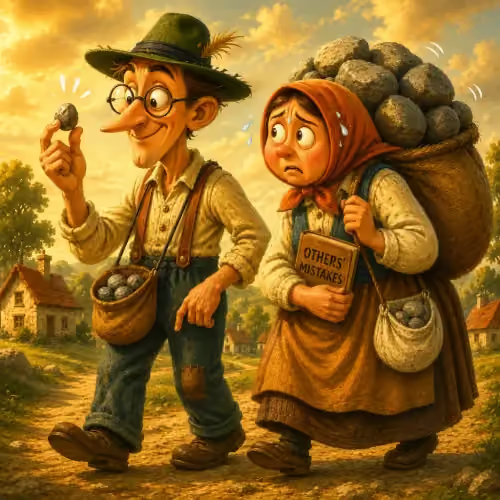
Once upon a time, everyone was born with two special bags around their neck. One bag was in front, and the other was on their back.
The bag in front had small stones, each one representing a mistake or a fault of other people. This bag was very easy to see into. Whenever someone did something wrong or made a silly choice, it was easy to take out a stone from the front bag and say, "Look! Here's a mistake you made!"
The back bag was bigger and heavier. It was filled with more stones, and each stone there was for the person's own mistakes. But because this bag was on their back, it was difficult for them to see what was inside.
So, people spent their days quickly pointing out the mistakes in their front bags, often forgetting about the big bag of stones they were carrying themselves. They told their friends and family about the small mistakes they noticed, while their own bigger mistakes were ignored.
One day, a wise old woman noticed this and brought everyone in the village together. "Why do you always notice the small stones in your front bags and forget about the big ones in your back bag?" she asked.
The people were confused. They hadn't realized they were doing this.
The wise woman explained, "Before we talk about someone else's mistakes, we should think about our own. We all have our own mistakes, and it's important to recognize and learn from them."
From that day, the people tried to be more understanding and forgiving.
Audio available for B1 version
Read Along unavailable for this story
Once upon a time, everyone was born with two special bags around their neck.
One bag was in front, and the other was on their back.
The bag in front had small stones, each one representing a mistake or a fault of other people.
This bag was very easy to see into.
Whenever someone did something wrong or made a silly choice, it was easy to take out a stone from the front bag and say, "Look!
Here's a mistake you made!"
The back bag was bigger and heavier.
It was filled with more stones, and each stone there was for the person's own mistakes.
But because this bag was on their back, it was difficult for them to see what was inside.
So, people spent their days quickly pointing out the mistakes in their front bags, often forgetting about the big bag of stones they were carrying themselves.
They told their friends and family about the small mistakes they noticed, while their own bigger mistakes were ignored.
One day, a wise old woman noticed this and brought everyone in the village together.
"Why do you always notice the small stones in your front bags and forget about the big ones in your back bag?" she asked.
The people were confused.
They hadn't realized they were doing this.
The wise woman explained, "Before we talk about someone else's mistakes, we should think about our own.
We all have our own mistakes, and it's important to recognize and learn from them."
From that day, the people tried to be more understanding and forgiving.

Something went wrong. Please try again.
Moral of the story
- Humility
Encourages modesty and humbleness, as shown in The Fighting Roosters and The Eagle
- Empathy
Advocates understanding and sharing the feelings of others, as shown in Androcles and the Lion
- Responsibility
Encourages taking care of one’s duties and being prepared, as shown in The Ant and the Grasshopper
Word Finder
Representing:
Showing or standing for something else clearly.Choice:
A decision made when picking between two things.Mistakes:
Something done wrong or not correctly by accident.Quickly:
Happening in a short amount of time, very fast.Ignored:
Not paying attention to something important or noticeable.Noticed:
Seeing or becoming aware of something for the first time.Village:
A small town or community where people live closely.Confused:
Not understanding something clearly or feeling mixed-up.Recognize:
To know or realize something because you've seen it before.Forgiving:
Being kind and understanding after someone does wrong.
Understanding Questions
- What do the small stones in the front bag represent?
- Why was it easy for people to see the mistakes of others?
- What was different about the back bag compared to the front bag?
- Why were the people in the village confused when the wise woman spoke to them?
- What lesson did the people learn after talking to the wise woman?
Reflection Questions
- Why do you think it was easier for people to see the mistakes of others than their own?
- What do you think the bags around their necks represent in real life?
- How does the story explain the importance of being aware of our own faults?
- Can you think of a time when you noticed someone else’s mistake but later realized you had a similar fault?
- What lesson can we learn from the wise old woman about how we treat others?
Fable Quotes
Focus on bettering yourself before judging others.
Understanding others begins with understanding yourself.
Handle your mistakes before you handle theirs.
Just One More Fable

- Perception
- Contentment
The Fir Tree and the Bramble
Proud Fir Tree belittles Bramble, boasting its value as timber, but Bramble reveals its safety and contentment over constant fear.

- Trust
- Consequences
The Otters and The Jackal
A jackal outsmarted two otters by dividing a fish between them and taking the best part for himself.

- Betrayal
- Gratitude
The Wolf and the Crane
A wolf tricks a helpful crane who removes a bone from his throat in exchange for a promised reward.

- Fear
- Cunning
The Fox and the Turkeys
A clever fox tricks tired turkeys all night, causing them to fall from their tree, and he catches them.