



The Brothers Grimm: The Story of Two Remarkable Scholars
October 23, 2025
The Brothers Grimm: Pioneers of Folklore
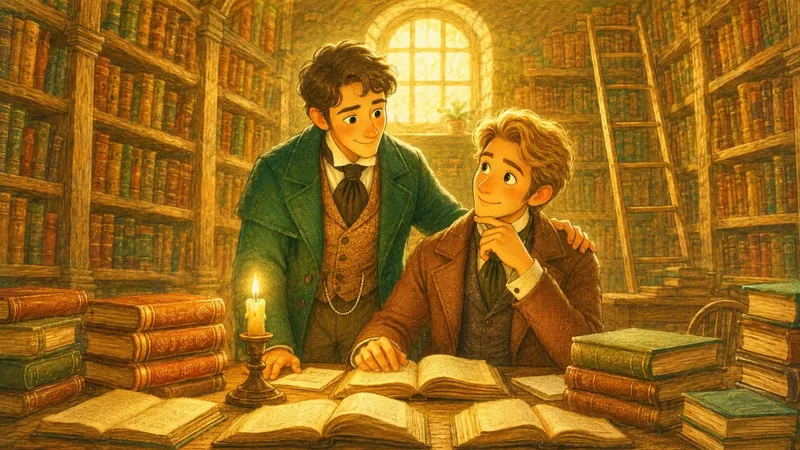
Jacob and Wilhelm Grimm, famously known as the Brothers Grimm, were two German scholars whose legacy has shaped the way the world views folklore and storytelling. Born in Hanau, Germany, Jacob (1785–1863) and Wilhelm (1786–1859) were the oldest of six siblings. Their father's early death in 1796 thrust the family into financial hardship, and the brothers quickly grew close, supporting each other through difficult times.
They studied law at the University of Marburg, but their true passion lay in the study of literature and the past. Inspired by their professors, including Friedrich Karl von Savigny, and poets like Johann Gottfried von Herder, they discovered a fascination with folk traditions. The Grimms believed that the stories passed down orally captured the very essence of human experience. These tales, they felt, preserved the hopes, fears, and values of communities through generations.
The brothers began collecting folk tales, inspired by a desire to preserve these oral traditions. In 1812, they published their first volume of Kinder- und Hausmärchen (Children's and Household Tales), a collection that would later become famous worldwide as Grimm's Fairy Tales. It featured timeless stories such as “Snow White,” “Cinderella,” and “Hansel and Gretel.” Their aim was not merely entertainment; they sought to accurately document the stories as they were told, reflecting the voice and spirit of the storytellers.
Jacob and Wilhelm were not just collectors of tales—they were pioneering scholars. Jacob's groundbreaking work in linguistics led to the formulation of “Grimm's Law,” which explained systematic sound changes in languages and laid the foundation for modern historical linguistics. Wilhelm, on the other hand, edited and refined their stories, making them accessible while preserving their folkloric authenticity.
Throughout their lives, the brothers faced political and social upheaval. Their work often intersected with their convictions about justice and cultural preservation. In 1837, they joined the “Göttingen Seven,” a group of professors who protested against the repeal of a liberal constitution. This act of defiance cost them their positions at the University of Göttingen, but it cemented their legacy as champions of academic and civil freedoms.
In 1840, they moved to Berlin at the invitation of the King of Prussia. There, they began their most ambitious project: the Deutsches Wörterbuch (German Dictionary), a comprehensive guide to the German language. Although neither lived to see its completion, the dictionary became a monumental contribution to philology and remains an important resource today.
Jacob remained a bachelor, devoted to his work, while Wilhelm married Dorothea Wild, and they had four children: Jacob (who was born and died in 1826), Herman (a literary and art historian), Rudolf (a jurist), and Auguste (Wilhelm's youngest child). Despite their differing personalities—Jacob was reserved and methodical, while Wilhelm was sociable and artistic—the brothers' collaboration was a perfect union of their strengths. Together, they left a lasting mark on literature, linguistics, and cultural history.
The Brothers Grimm dedicated their lives to preserving the stories, language, and traditions of their people, creating a legacy that transcends borders and centuries. Their graves lie side by side in Berlin, a testament to their unbreakable bond and shared mission.
Their timeless tales continue to inspire storytellers and readers alike. At FableReads, we share fables—stories that are short and convey clear moral lessons, often featuring animals or inanimate objects with human qualities. While the Brothers Grimm are renowned for their fairy tales, filled with magical elements and complex narratives, many of their works are not considered fables and therefore are not included on our platform. However, a few of their tales align with our focus on moral storytelling.
Read stories of the Brothers Grimm at FableReads.com, including The Hare and the Hedgehog, Hans in Luck, The Wolf and the Seven Little Kids, and more.
Bibliography
“Brothers Grimm.” Encyclopaedia Britannica. Accessed December 2024. https://www.britannica.com/biography/Brothers-Grimm
Related Posts

20 Popular Fables and Their Moral Lessons
Looking for famous short stories with valuable life lessons? Reading timeless tales is a wonderful way to learn about moral values, practice reading comprehension, and discover rich cultural traditions from different parts of the world.
Read More
5 Best Fables About Kindness for Kids
Have you ever noticed how a tiny act of help can change someone's entire day? Finding the right fables about kindness for kids is a wonderful way to show little ones that being helpful is a true superpower.
Read More
How to Teach Children Moral Values Using Classic Fables
Children learn best through stories. A single, well-told tale with a clear lesson can stay with a child for life, shaping how they treat others, handle challenges, and make decisions. That is why teaching moral values through classic fables still works just as powerfully today as it did thousands of years ago.
Read More