


حزمة العصي
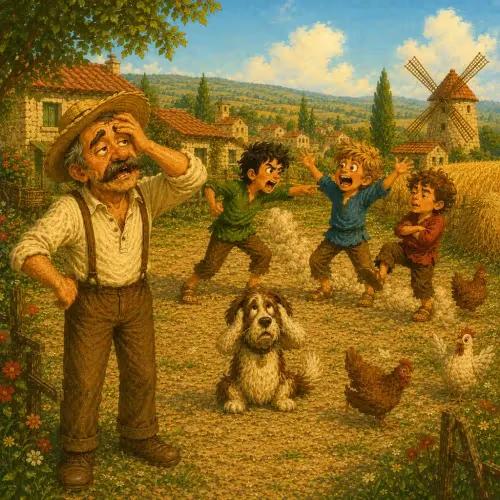
يعلّم المزارع أبناءه المتشاجرين درسًا عن قوة الوحدة باستخدام حزمة من العصي التي يصعب كسرها.
 متميز في كتاب الأساطير
 Once upon a time, in a quiet little village, there was a hardworking farmer who owned a farm.
His fields stretched far with golden crops.
The villagers often said, “That farmer must be the happiest man in town!
With three strong, handsome sons, what more could he ask for?”
But the farmer was not as happy as people thought.
His sons were always arguing.
No matter how much he told them to get along, they kept fighting over small things.
One afternoon, while resting under the shade of a large tree, the farmer had an idea.
He walked to the woodpile.
He gathered some sticks and tied them into a tight bundle.
Then, he called his sons and placed the bundle in front of them.
"Try to break this," he said.
The eldest son stepped forward first.
He gripped the bundle and pressed with all his strength, but it wouldn’t break.
The second son tried next.
Then the youngest gave it a go.
But no matter how hard they pushed or twisted, the sticks wouldn't budge.
After watching them struggle, the farmer took the bundle and untied the rope.
He handed each son a single stick.
"Now, try again," he said.
One by one, the sons snapped their sticks easily.
The eldest son frowned.
"Father, what does this mean?
Why did we do that?"
The farmer smiled.
"My sons, you are like these sticks.
When the sticks are bound together, they are strong.
But alone, they break without effort.
The same is true for you.
If you keep fighting and standing apart, you will be weak.
But if you stand together, no one will be able to break you."
The sons looked at each other, their father's words sinking in.
They remembered all the times they had fought over little things.
They realized how silly it was.
From that day on, they worked together.
They supported one another and became a happy family.
Their bond was strong, like a bundle of sticks.
The farmer smiled.
He knew his lesson had strengthened their bond and their hearts.
Kudala-dala, kwilali encinci ezolileyo, kwakukho umfama owayesebenza nzima owayenefama. Amasimi akhe ayethe qelele enezityalo ezixabisekileyo. Abahlali belali babedla ngokuthi, “Lo mfama umele ukuba ngoyena mntu wonwabileyo edolophini!”
Kodwa umfama wayengonwabanga njengokuba abantu babecinga. Oonyana bakhe babesoloko bexambulisana. Kungakhathaliseki ukuba wayebaxelela kangakanani ukuba bavane, baqhubeka besilwa ngezinto ezincinci.
Ngenye injikalanga, ngoxa wayephumle phantsi komthunzi womthi omkhulu, umfama waba necebo. Wahamba waya kwimfumba yeenkuni. Waqokelela iinkuni waza wazibophelela kwinyanda eqinileyo.
Emva koko, wabiza oonyana bakhe waza wabeka inyanda phambi kwabo.
“Zama ukuyophula le nto,” watsho.
Unyana omkhulu uye ngaphambili. Wayibamba inyanda waza wayicinezela ngamandla akhe onke, kodwa ayizange iqhawuke. Unyana wesibini wazama ngokulandelayo. Emva koko, oyena mncinane wayeka. Kodwa kungakhathaliseki ukuba babetyhala okanye babejija kangakanani na, iintonga zazingenakushukuma.
Emva kokuba ebabukele besokola, umfama wathatha inyanda waza wayikhulula intambo. Wanika unyana ngamnye intonga enye. “Ngoku, zama kwakhona,” watsho.
Unyana ngamnye wophula iintonga yakhe lula.
Unyana omkhulu wafinga iintshiya. "Tata, ithetha ukuthini lento? Siyenzele ntoni?"
Umfama wancuma. "Bantwana bam nifana nezinduku. Xa zidityanisiwe iintonga zomelele. Kodwa xa zizodwa zophuka kungekho ntsokolo iyephi. Kuyafana ke nakuni. Ukuba nihlala nisilwa, nokwahlukana, nibebuthakathaka. Kodwa ukuba nima ndawonye akukho mntu uya kuniqhawula."
Bajongana oonyana, amazwi kayise etshona. Baqonda ukuba bubudenge iingxwabangxwaba babebanazo.
Ukususela ngaloo mini, basebenza kunye. Baxhasana baza baba lusapho olonwabileyo. Ubudlelwane babo bomelele, bunjengenyanda yeenkuni.
Umfama wancuma. Wayesazi ukuba isifundo sakhe someleza ubudlelwana kunye neentliziyo zabo.
Xa umfama ezisa inyanda yeenkuni koonyana bakhe, bayayeka ukuxambulisana. Bafundiswe njani yinyanda nje yeenkuni?
كان يا ما كان في قديم الزمان، في قرية صغيرة، مزارع يملك مزرعة كبيرة والكثير من المحاصيل. وكان الناس يقولون إن هذا المزارع هو أسعد إنسان في العالم لأنه لديه ثلاثة أبناء وسيمين. ولكن في الحقيقة، كان المزارع دائم القلق لأن أبناءه كانوا يتشاجرون مع بعضهم البعض باستمرار.
في يوم مشمس، خطرت للمزارع فكرة. أحضر مجموعة من العصي وربطها معًا بحبل. ثم طلب من كل واحد من أبنائه أن يحاول كسر الحزمة. حاولوا سحبها ودفعها، لكن الحزمة لم تنكسر.
بعد أن تعبوا واستسلموا، فكّ المزارع الحزمة وأعطى كل ابن عصا واحدة. قال لهم: "حاولوا الآن كسر هذه." وفي الحال، كُسرت العصي بسهولة.
سأل الابن الأكبر، وهو يحك رأسه: "أبي، لماذا فعلنا هذا؟"
ابتسم المزارع بحنان وقال: "يا أبنائي، أنتم مثل هذه العصي. عندما تكونون معًا، تكونون أقوياء. ولكن إذا بقيتم غاضبين من بعضكم البعض، فستصبحون مثل العصي المنفردة – من السهل كسرها. اتحدوا معًا، وستصبحون أقوياء."
فكر الأبناء فيما قاله والدهم وأدركوا ما كان يحاول تعليمه لهم. ومنذ ذلك اليوم، وعدوا أن يبقوا معًا ويدعموا بعضهم البعض.
أسئلة التأمل
- لماذا تعتقد أن الخنزيرين الأولين اختارا مواد خفيفة لبناء بيوتهما بدلاً من الطوب؟
- كيف أثر اختيار الخنزير الثالث لمواد البناء في أحداث القصة؟
- ماذا تعلمنا هذه القصة عن التخطيط وأخذ الوقت الكافي للقيام بالأشياء بشكل صحيح؟
- لماذا لم يتمكن الذئب من هدم بيت الطوب؟
- كيف أظهرت تصرفات الخنازير الثلاثة أهمية العمل معًا ومساعدة بعضهم البعض؟
اقتباسات الحكايات
الاتحاد قوة، والانقسام ضعف.
وحدنا نعاني؛ معًا، ننتصر.
القوة الحقيقية تكمن في الروابط، وليس في العزلة.
فقط خرافة أخرى

- التواضع
- تصور
الأسد والتمثال
في جدال حول القوة، يعرض رجل تمثالاً لإنسان يهزم أسدًا، لكن الأسد يتساءل عن منظور القصة.

- يثق
- عواقب
الولد الذي صاح "الذئب"
يصرخ صبي الراعي مرارًا "ذئب" ليخدع القرويين، لكن عندما يأتي ذئب حقيقي، لا يصدقه أحد.

- احترام
- العطف
الثور الذي فاز بالعقوبة
رجل مغرور يتفاخر بقوة ثوره، ولكن بعد إظهاره للطف والتواضع، يثبت الثور قوته الحقيقية.

- عواقب
- مسؤولية
التاجر والحمار
يحاول الحمار تخفيف حمل الملح بالوقوع في النهر، لكنه يتعلم درسه عندما تصبح الأكياس أثقل بالقطن.
Read it on paper, too
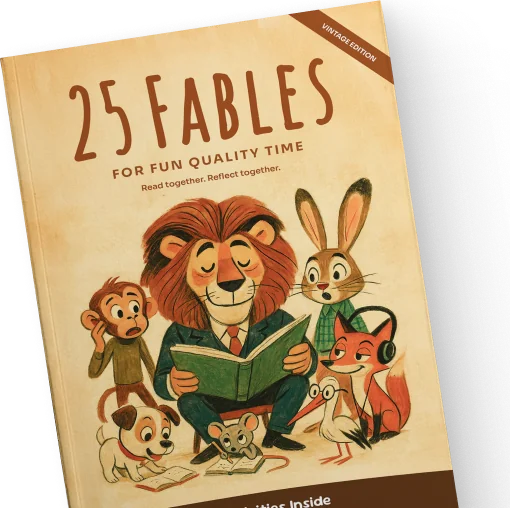
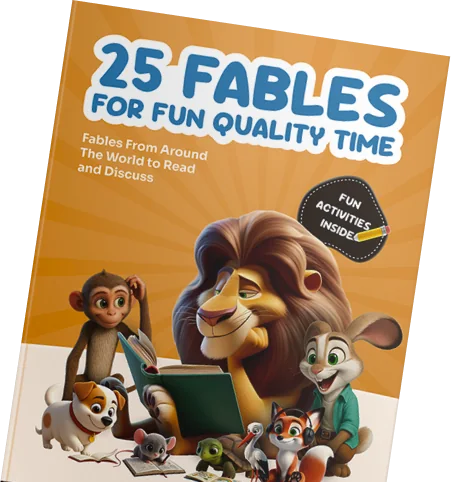
“حزمة العصي” is one of the 25 illustrated fables in our book, 25 Fables for Fun Quality Time.
Every copy keeps stories free and ad-free for children, parents and teachers everywhere.
احصل على كتابك