



The Gardener and the Aged Tree
An old pear tree, about to be cut down, persuades a gardener to spare it with the help of nightingales and bees.
In a quiet garden, there was an old pear tree. It had been there for many years, giving tasty pears to everyone. But now, it was very old and could not produce any fruit anymore. One day, the gardener decided to cut down the tree because it was no longer useful.
The gardener took his sharp axe and started to chop the tree. As the axe hit the tree's trunk, the old pear tree began to speak. "Please, kind gardener," the tree said, "remember all the sweet pears I gave over the years. Think of the joy and praise I brought to this garden. Please don't cut me down."
The gardener paused and replied, "I understand, old tree, but I need wood for my home. I don’t have time to go to the forest to get it."
Just then, a group of nightingales, the beautiful birds living in the garden, began to sing. Their songs were so lovely that they reminded the gardener of the times his wife sat under the tree, listening to the birds and feeling happy and relaxed. "Please don't cut down this tree," the nightingales seemed to sing. "Remember how much joy it has brought."
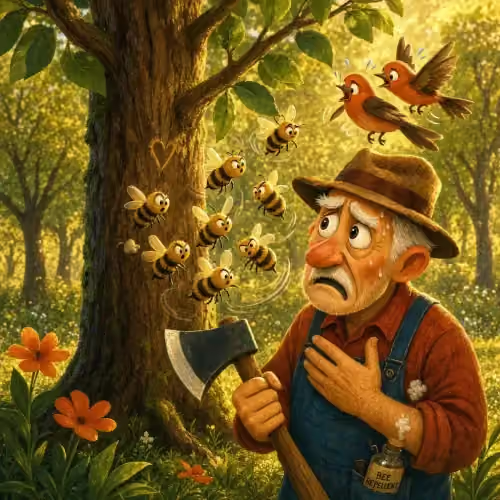
The gardener hesitated but then lifted his axe again. As he swung the axe, it struck the tree hard, and suddenly, a swarm of bees flew out from a hole in the tree. The bees buzzed angrily around the gardener and spoke in their own way. "What are you doing? This tree is our home! If you leave us our home, we can make honey for you, and it will be more useful than the wood from this tree."
The gardener thought about what the bees said. He remembered the happy times his wife spent under the tree and realized how important the tree was to the garden. "You’re right," he said to the bees. "This tree has given me so much. I should let it stand. And you can keep making honey for us."
Feeling grateful, the gardener put down his axe. He decided to plant flowers around the tree so the bees would have plenty of nectar to make their honey. The tree stayed in the garden, and everyone continued to enjoy its shade and the beautiful songs of the nightingales.
Audio available for B1 version
Read Along unavailable for this story
In a quiet garden, there was an old pear tree.
It had been there for many years, giving tasty pears to everyone.
But now, it was very old and could not produce any fruit anymore.
One day, the gardener decided to cut down the tree because it was no longer useful.
The gardener took his sharp axe and started to chop the tree.
As the axe hit the tree's trunk, the old pear tree began to speak.
"Please, kind gardener," the tree said, "remember all the sweet pears I gave over the years.
Think of the joy and praise I brought to this garden.
Please don't cut me down."
The gardener paused and replied, "I understand, old tree, but I need wood for my home.
I don’t have time to go to the forest to get it."
Just then, a group of nightingales, the beautiful birds living in the garden, began to sing.
Their songs were so lovely that they reminded the gardener of the times his wife sat under the tree, listening to the birds and feeling happy and relaxed.
"Please don't cut down this tree," the nightingales seemed to sing.
"Remember how much joy it has brought."
The gardener hesitated but then lifted his axe again.
As he swung the axe, it struck the tree hard, and suddenly, a swarm of bees flew out from a hole in the tree.
The bees buzzed angrily around the gardener and spoke in their own way.
"What are you doing?
This tree is our home!
If you leave us our home, we can make honey for you, and it will be more useful than the wood from this tree."
The gardener thought about what the bees said.
He remembered the happy times his wife spent under the tree and realized how important the tree was to the garden.
"You’re right," he said to the bees.
"This tree has given me so much.
I should let it stand.
And you can keep making honey for us."
Feeling grateful, the gardener put down his axe.
He decided to plant flowers around the tree so the bees would have plenty of nectar to make their honey.
The tree stayed in the garden, and everyone continued to enjoy its shade and the beautiful songs of the nightingales.

Something went wrong. Please try again.
Moral of the story
- Value
Encourages the importance, worth, or usefulness of something, as seen in The Wasps, Partridges, and The Farmer
- Gratitude
Encourages showing appreciation for the kindness, as in The Lion and the Mouse
- Appreciation
Promotes acknowledgment of value, as seen in The Town Mouse and The Country Mouse
Word Finder
Produce
Make or create something, like fruits.Trunk
The main woody stem of a tree.Joy
Feeling of great happiness or delight.Paused
Stopped doing something for a short time.Nightingales
Small birds known for their beautiful songs.Hesitated
Stopped briefly before doing something.Swarm
A large group of flying insects.Buzzed
Made a continuous humming sound, like bees.Nectar
Sweet liquid from flowers that bees use.Grateful
Feeling thankful for kindness or help.
Understanding Questions
- Why did the gardener decide to cut down the old pear tree?
- What did the old pear tree say to the gardener to try to convince him not to cut it down?
- How did the nightingales try to save the tree from being cut down?
- What did the bees offer the gardener in exchange for not cutting down the tree?
- What did the gardener do after he decided to keep the tree in the garden?
Reflection Questions
- Why did the gardener decide to cut down the old pear tree at first?
- How did the old pear tree try to convince the gardener not to cut it down?
- Can you think of a time when you realized something you wanted to get rid of was actually very useful?
- Why is it important to remember and appreciate the things that have helped us in the past, like the old pear tree?
- What does this story teach us about gratitude and recognizing the value of things that may seem useless at first?
Fable Quotes
"Appreciate the little things, for one day you may look back and realize they were the big things."
"The worth of something is not measured by its price but by the joy it brings."
"Gratitude turns what we have into enough."
Just One More Fable

- Identity
- Imitation
The Eagle, the Jackdaw and the Shepherd
A Jackdaw, envious of an Eagle's hunting prowess, unsuccessfully attempts to mimic it and is captured by a Shepherd.

- Consequences
- Caution
The Greedy Merchant
A greedy merchant loses his sight due to his excessive greed for treasures offered by a holy man.

- Friendship
- Deception
The Monkey and the Crocodile
A clever monkey outsmarts a crocodile, who tries to betray their friendship to please his wife, and they part ways.

- Greed
- Consequences
The Tongue-Cut Sparrow
The kind old man saves an injured sparrow, but his wife mistreats it; subsequently, the sparrow rewards him while his wife faces the consequences of greed.