



The Faith of a Starving Man
A man collects seemingly useless items on his journey, which later help him survive by a river.
Once, there was a wandering man known for his positive spirit. He had been walking in the desert for a long time and was very hungry. One day, as he traveled along a path looking for food, he saw an empty bag lying on the side of the road. It was probably left there by someone who had passed by earlier. The man picked up the empty bag, put it over his shoulder, and said aloud, “I’m thankful for finding an empty bag.” Even though it had no food, he was thankful for what he had found.
As he kept walking, he saw an old hunting bow, but the string was broken. Although it couldn’t be used, the man picked it up and put it in his bag. Again, he spoke to himself, “I’m thankful for this broken bow.” He continued his journey with hope in his heart.
Soon after, he came to a dry, dead tree. There were no fruits on the tree, but he broke off a few dry branches and added them to his bag. He smiled and said, “I’m thankful for these branches from the old tree.”
As he continued, the man found an old cooking pot. It was dented and full of dust, but he cleaned it and put it in his bag as well. He said with appreciation, “I’m thankful for this old pot.”
Further down the road, he saw something small and shiny on the ground. It was a fishing hook, but there was no fishing pole. He picked up the hook, put it in his bag, and said, “I’m thankful for this hook, even without a pole.”
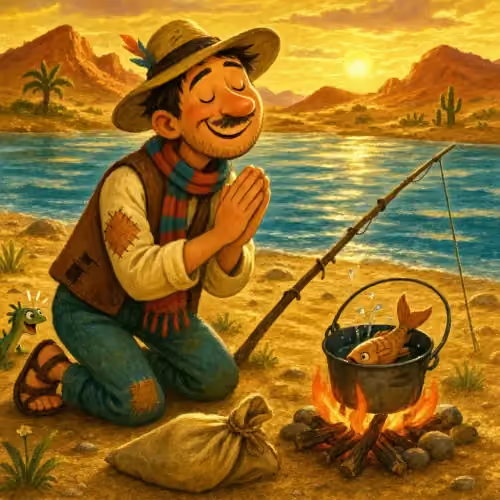
Days passed, and the man kept walking until he reached a wide river. It was so large that he couldn’t see the other side. Tired and weak, he knelt by the riverbank and said, “I’m thankful for reaching this river, even though I cannot cross it.”
Sitting by the river, he took out the things he had collected. He tied the broken bowstring to the fishing hook and used it as a simple fishing pole. Waiting patiently by the river, he finally caught a fish. He used the old pot to cook the fish over a fire he made from the dry branches.
As he ate, the man smiled and said, “I’m thankful for all the little things I found along the way. They gave me exactly what I needed, even though I didn’t see it at first.”
Audio available for B1 version
Read Along unavailable for this story
Once, there was a wandering man known for his positive spirit.
He had been walking in the desert for a long time and was very hungry.
One day, as he traveled along a path looking for food, he saw an empty bag lying on the side of the road.
It was probably left there by someone who had passed by earlier.
The man picked up the empty bag, put it over his shoulder, and said aloud, “I’m thankful for finding an empty bag.”
Even though it had no food, he was thankful for what he had found.
As he kept walking, he saw an old hunting bow, but the string was broken.
Although it couldn’t be used, the man picked it up and put it in his bag.
Again, he spoke to himself, “I’m thankful for this broken bow.”
He continued his journey with hope in his heart.
Soon after, he came to a dry, dead tree.
There were no fruits on the tree, but he broke off a few dry branches and added them to his bag.
He smiled and said, “I’m thankful for these branches from the old tree.”
As he continued, the man found an old cooking pot.
It was dented and full of dust, but he cleaned it and put it in his bag as well.
He said with appreciation, “I’m thankful for this old pot.”
Further down the road, he saw something small and shiny on the ground.
It was a fishing hook, but there was no fishing pole.
He picked up the hook, put it in his bag, and said, “I’m thankful for this hook, even without a pole.”
Days passed, and the man kept walking until he reached a wide river.
It was so large that he couldn’t see the other side.
Tired and weak, he knelt by the riverbank and said, “I’m thankful for reaching this river, even though I cannot cross it.”
Sitting by the river, he took out the things he had collected.
He tied the broken bowstring to the fishing hook and used it as a simple fishing pole.
Waiting patiently by the river, he finally caught a fish.
He used the old pot to cook the fish over a fire he made from the dry branches.
As he ate, the man smiled and said, “I’m thankful for all the little things I found along the way.
They gave me exactly what I needed, even though I didn’t see it at first.”

Something went wrong. Please try again.
Moral of the story
- Resourcefulness
Advocates treating others with consideration and regard, as shown in The Two Pots
- Contentment
Encourages satisfaction with what one has, as portrayed in The Dog and its Reflection
- Gratitude
Encourages showing appreciation for the kindness, as in The Lion and the Mouse
Word Finder
Wandering:
Moving from place to place without a plan.Positive:
Seeing the good side of things.Desert:
Dry, empty land with very little water.Thankful:
Feeling happy for what you have.Appreciation:
Feeling glad or grateful for something.Dented:
Having a small, pushed-in mark or area.Shiny:
Reflecting light; bright and polished-looking.Riverbank:
The land right next to a river’s edge.Patiently:
Waiting calmly without getting upset.Journey:
A long trip or traveling from one place to another.
Understanding Questions
- Why was the man thankful when he found the empty bag on the side of the road?
- What did the man do when he found the broken hunting bow?
- How did the man use the fishing hook he found on the ground?
- How did the man use the dry branches he found from the old tree?
- In the end, how did all the small items he collected help the man?
Reflection Questions
- Why do you think the man was thankful for things that seemed broken or useless?
- How did each item he found along the way help him in the end?
- Can you think of a time when something small or unexpected helped you solve a problem?
- Why is it important to stay positive, even when things don’t seem to go as planned?
- What does this story teach us about gratitude and making the most of what we have?
Fable Quotes
"Appreciate every little thing, for they can turn into something big."
"A clever mind can make something out of nothing."
"Contentment is finding joy in what’s in front of us."
Just One More Fable

- Courage
- Respect
The Old Hound
Once a mighty hound, now old and frail, failed to catch a boar, pleading with his master to remember his former glory.

- Value
- Wisdom
The Huntsman and The Fisherman
Huntsman and fisherman swap catches, finding excitement in new flavors, but a wise neighbor warned them of the fading novelty.

- Freedom
- Wisdom
The Cobbler and the Financier
A cobbler loses his happiness and sleep after receiving money from a rich neighbor, eventually returning it to regain his joy.

- Perseverance
- Resourcefulness
The Fisherman Pipes to the Fish
A fisherman plays his pipe to lure fish but realizes hard work with a net catches more.